
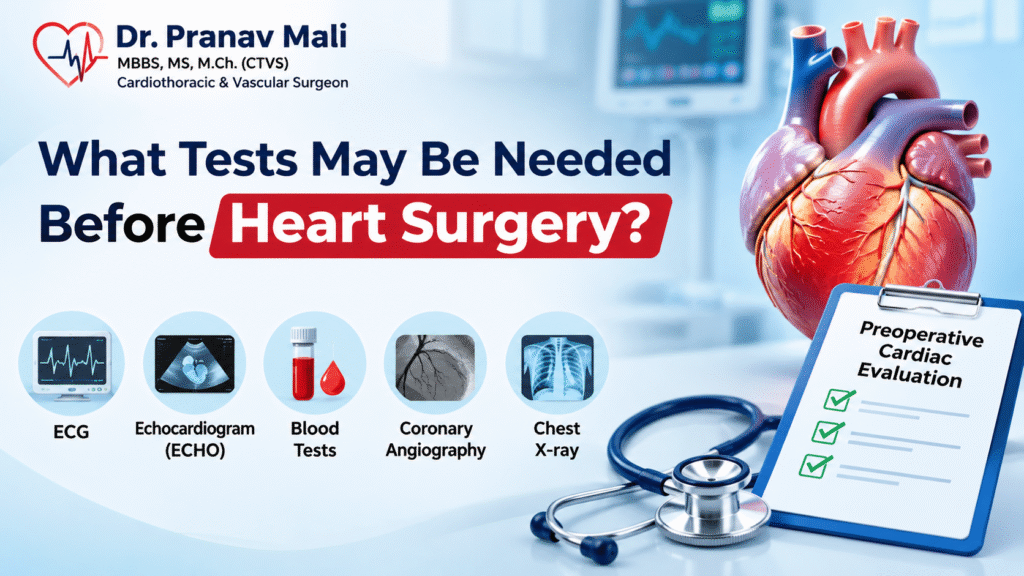
What Tests May Be Needed Before Heart Surgery?
Before heart surgery, doctors may recommend several tests to assess the patient’s heart function, overall health and suitability for the planned procedure. These investigations help the medical team understand the patient’s condition and plan appropriate care before surgery.
The tests required vary from person to person. They depend on the type of heart surgery, symptoms, medical history, examination findings and the results of previous investigations. Learn more about different cardiothoracic and vascular surgery procedures and the assessments that may be required before treatment.
Common Tests Before Heart Surgery
1. Electrocardiogram (ECG)
An electrocardiogram (ECG) records the electrical activity of the heart. It can help identify abnormal heart rhythms and certain changes in heart activity that may require further assessment.
2. Echocardiogram
An echocardiogram uses ultrasound to produce images of the heart. It helps doctors assess the heart’s pumping function, chambers and valves. This test may be particularly useful when evaluating heart valve problems or reduced heart function.
3. Blood Tests
Blood tests may be recommended to assess blood counts, kidney function, blood sugar levels, electrolytes and other factors relevant to surgery and anaesthesia. Additional tests may be required depending on the patient’s medical history and the planned procedure.
4. Coronary Angiography and Other Imaging Tests
Some patients may need coronary angiography to examine the blood vessels supplying the heart. Other imaging investigations may be recommended to assess the heart and surrounding blood vessels in greater detail.
The choice of test depends on the suspected condition, the type of surgery being considered and the information available from previous investigations. These investigations form part of the broader evaluation used when planning CTVS procedures.
5. Chest X-ray and Lung Assessment
A chest X-ray may be recommended to assess the lungs and chest before surgery. Additional lung function tests may be considered for patients with certain respiratory conditions or when the medical team identifies a specific need.
Not every patient requires these investigations.
6. Additional Tests When Required
Depending on the patient’s condition, doctors may recommend other investigations, such as carotid artery ultrasound or specialised cardiac assessments. These tests are selected according to individual risk factors, clinical findings and the planned operation.
Why Is Preoperative Assessment Important?
Preoperative assessment helps the medical team review the patient’s overall health before surgery. It may identify medical conditions that need attention, provide information for anaesthesia planning and help the team prepare for care during recovery.
Doctors consider test results alongside symptoms, medical history and physical examination findings. The results also help the team discuss the potential benefits and risks of the proposed procedure.
Although these investigations provide important information, no test can predict every possible complication or guarantee a risk-free operation.
How Can Patients Prepare for Their Assessment?
Patients can prepare for their preoperative assessment by following a few practical steps:
- Bring previous medical reports, scan results and relevant hospital records.
- Provide a list of current prescription medicines, over-the-counter medicines and supplements.
- Inform the medical team about existing medical conditions and known allergies.
- Follow the hospital’s instructions about fasting and taking medicines before tests.
- Ask the treating team why each test is needed and when the results will be available.
Patients should not stop prescribed medicines or change their doses without instructions from their treating clinician.
Frequently Asked Questions
Does every patient need all the tests before heart surgery?
No. The tests depend on the patient’s medical condition, the type of surgery and the results of previous investigations. The treating team decides which assessments are necessary.
How long before surgery are these tests performed?
The timing varies according to the investigation, the planned procedure, hospital protocols and the patient’s condition. The medical team will advise when the tests should be completed.
Can normal test results guarantee a risk-free heart operation?
No. Test results help doctors assess a patient’s condition and plan treatment, but they cannot eliminate every surgical risk or guarantee a particular outcome. The medical team evaluates the overall clinical picture before recommending surgery.
Should patients bring previous test reports to their appointment?
Yes. Previous reports and scans can help the medical team understand the patient’s medical history and determine whether further investigations are needed.
Conclusion
Tests before heart surgery help doctors assess heart function, review general health and plan appropriate treatment. Depending on the patient’s condition, investigations may include an ECG, echocardiogram, blood tests, coronary angiography and other assessments.
The tests required are individualised, so patients should follow the recommendations of their treating medical team and discuss any questions or concerns before surgery. For more information about the procedures involved, read the guide to CTVS procedures.
Medical Disclaimer: This article is for general educational purposes only and does not replace professional medical advice, diagnosis or treatment. The investigations required before heart surgery vary from patient to patient. Always follow the advice of your treating medical team.