Overview
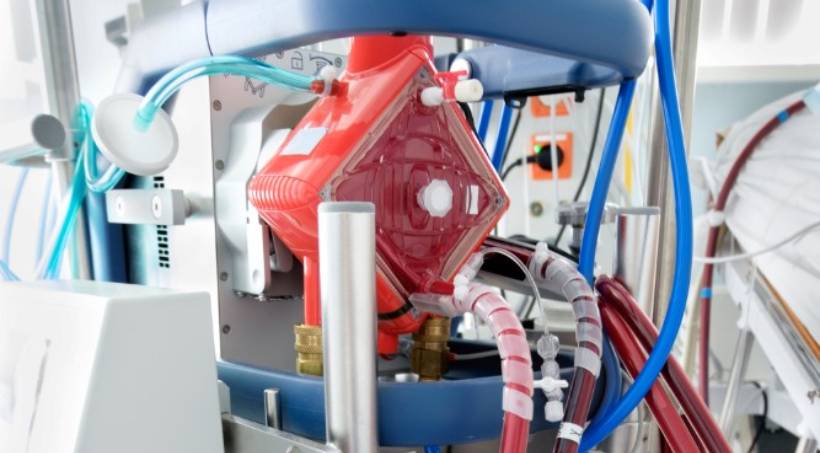
ECMO is an advanced life-support technique used when the heart and/or lungs are severely compromised and fail to function adequately. It temporarily takes over their role, allowing time for recovery or transition to long-term support like transplantation or surgery. ECMO is commonly used in critical care, particularly for patients with severe cardiac or respiratory failure.
Indications for ECMO
Severe cardiac arrest or cardiogenic shock
Acute Respiratory Distress Syndrome (ARDS)
Post-cardiac surgery support
Pulmonary embolism
Bridge to transplant or recovery
Symptoms of Patients Needing ECMO
Severe breathlessness or gasping for air
Profound drop in blood pressure
Inability to maintain oxygen saturation despite ventilator support
Cyanosis (bluish skin due to lack of oxygen)
Loss of consciousness or multi-organ failure
Types of ECMO
VA ECMO (Veno-Arterial): Supports both heart and lungs
VV ECMO (Veno-Venous): Supports only the lungs
Procedure & Monitoring
Cannulation via large blood vessels (neck/groin)
Continuous monitoring in ICU
Anticoagulation to prevent clotting
Frequent imaging and lab tests
Risks and Complications
Bleeding and clotting issues
Infection
Stroke or embolism
Organ failure if support is prolonged
Conclusion
ECMO is often a last-resort but highly effective intervention that saves lives when conventional treatments fail. It requires a highly skilled team and intensive care setting, and patient outcomes depend on the underlying condition and timing of initiation.
Our Service
- Advanced Cardiac
- Aortic & Vascular Surgery
- Aortic Root Surgery
- CTVS Procedures
- ECMO Support
- Heart & Chest Disease
- Minimally Invasive Cardiac Surgery (MICS)
- Off-Pump Bypass Surgery
- Pediatric Heart Surgery
- Risk Assessment & Early Diagnosis
- Thoracic Surgery
- Total Arterial Bypass (CABG)
- Valve Repair/Replacement
About Dr. Pranav Mali
Dr. Pranav Mali’s academic pursuits led him to Government Medical College, Nagpur, where he earned his M.B.B.S. Subsequently, he pursued further specialization, attaining M.S. in General Surgery and M.Ch. in Cardiothoracic and Vascular Surgery from the esteemed KEM Hospital and Seth GS Medical College in Mumbai, renowned as one of India’s premier institutions.