
Heart disease remains one of the leading causes of death worldwide, and blocked coronary arteries are a major reason behind heart attacks and chest pain. Fortunately, advances in modern cardiology have made it possible to restore blood flow through treatments like angioplasty and heart bypass surgery. However, many patients wonder which option is best for their condition.
If you or a loved one has been diagnosed with blocked heart arteries, understanding the differences between these procedures can help you make an informed decision. If you are searching for the Best Heart Surgeon in Nashik, it is equally important to consult an experienced cardiologist who can recommend the most appropriate treatment based on your heart condition. Dr. Pranav Mali, an experienced cardiac specialist, believes that every patient deserves a personalized treatment plan for the best possible outcome.
What Is Angioplasty?
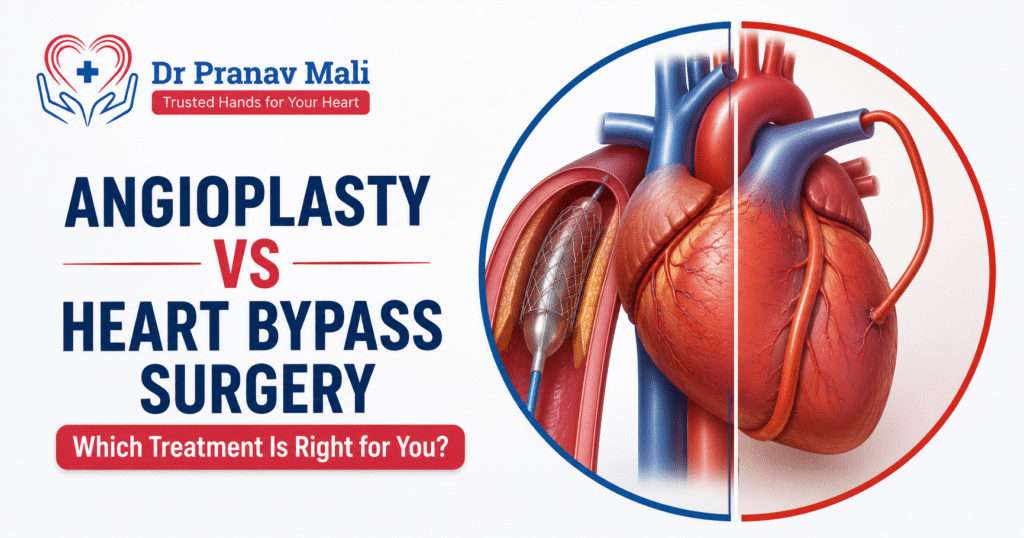
Angioplasty, also known as Percutaneous Coronary Intervention (PCI), is a minimally invasive procedure used to open narrowed or blocked coronary arteries. During the procedure, a thin catheter with a small balloon is inserted through a blood vessel, usually in the wrist or groin, and guided to the blocked artery. The balloon is inflated to widen the artery, and in most cases, a stent is placed to keep the artery open.
Angioplasty is often recommended for patients with:
- One or two blocked coronary arteries.
- Sudden heart attacks requiring emergency treatment.
- Less complex coronary artery disease.
- Persistent chest pain despite medication.
The procedure usually requires a shorter hospital stay, and many patients return to normal activities within a few days.
What Is Heart Bypass Surgery?
Heart bypass surgery, also called Coronary Artery Bypass Grafting (CABG), is a surgical procedure that creates a new pathway for blood to flow around blocked coronary arteries. A healthy blood vessel is taken from the leg, chest, or arm and grafted to bypass the blockage.
A Heart Bypass Specialist may recommend bypass surgery for patients with:
- Multiple blocked coronary arteries.
- Severe blockages involving the left main coronary artery.
- Diabetes with complex coronary artery disease.
- Reduced heart function.
- Failed previous angioplasty or multiple stent blockages.
Although bypass surgery involves a longer recovery period than angioplasty, it often provides excellent long term outcomes for patients with advanced coronary artery disease.
According to the American Heart Association (AHA), both angioplasty and bypass surgery are effective treatments, and the choice depends on the severity and pattern of coronary artery disease.
Angioplasty vs Heart Bypass Surgery: Key Differences
Both procedures improve blood flow to the heart, but they differ in several important ways.
| Feature | Angioplasty | Heart Bypass Surgery |
| Procedure | Minimally invasive | Open heart surgery |
| Hospital Stay | Usually 1 to 2 days | Usually 5 to 7 days |
| Recovery Time | Few days to one week | Several weeks |
| Best For | Limited artery blockage | Multiple or complex blockages |
| Use of Stent | Yes | No |
| Long Term Benefit | Excellent for selected patients | Better for extensive coronary disease |
Your cardiologist and Heart Bypass Specialist will evaluate your overall health, angiography results, and medical history before recommending the most suitable treatment.
When Is Angioplasty the Better Choice?
Angioplasty may be preferred when:
- There is a single or limited number of artery blockages.
- The blockage is suitable for stent placement.
- The patient is experiencing an acute heart attack.
- Surgery carries a high risk due to other medical conditions.
One of the major advantages of angioplasty is its shorter recovery time and reduced hospital stay.
When Is Heart Bypass Surgery Recommended?
Heart bypass surgery may provide better long term results in certain situations.
Doctors often recommend bypass surgery for:
- Triple vessel coronary artery disease.
- Significant blockage of the left main coronary artery.
- Patients with diabetes and multiple blockages.
- Reduced pumping function of the heart.
- Complex coronary anatomy unsuitable for angioplasty.
Several large clinical studies have shown that bypass surgery may reduce the need for repeat procedures in patients with extensive coronary artery disease.
According to the European Society of Cardiology (ESC), CABG remains the preferred treatment for many patients with complex multivessel coronary artery disease.
Recovery After Both Procedures
Recovery varies depending on the treatment performed.
After Angioplasty
Most patients:
- Walk within a few hours.
- Return home within one or two days.
- Resume light activities within a week.
- Continue medications such as blood thinners.
After Heart Bypass Surgery
Recovery generally includes:
- Hospital stay of approximately one week.
- Gradual return to daily activities over several weeks.
- Cardiac rehabilitation.
- Regular follow up appointments.
- Lifestyle modifications to protect heart health.
Regardless of the procedure, maintaining a healthy lifestyle remains essential.
Lifestyle Changes After Treatment
Whether you undergo angioplasty or bypass surgery, protecting your heart requires long term commitment.
Your doctor may recommend:
- Following a heart healthy diet.
- Exercising regularly after medical clearance.
- Quitting smoking.
- Maintaining a healthy weight.
- Controlling blood pressure, cholesterol, and diabetes.
- Taking prescribed medications regularly.
- Attending routine follow up appointments.
These habits significantly reduce the risk of future cardiac events.
How Does Your Doctor Decide Which Treatment Is Best?
Choosing between angioplasty and bypass surgery depends on several factors, including:
- Number of blocked arteries.
- Location and severity of blockages.
- Overall heart function.
- Presence of diabetes.
- Age and general health.
- Previous heart procedures.
A multidisciplinary heart team often reviews complex cases to recommend the safest and most effective treatment.
According to the National Heart, Lung, and Blood Institute (NHLBI), treatment decisions should always be individualized based on each patient’s condition and overall cardiovascular risk.
Conclusion
Both angioplasty and heart bypass surgery are highly effective treatments for coronary artery disease. The right option depends on the extent of artery blockage, your overall health, and your long term cardiac goals. While angioplasty offers a quicker recovery for suitable patients, bypass surgery often provides better long term outcomes for those with complex or multiple artery blockages.
If you are looking for an experienced Heart Bypass Specialist in Nashik, Dr. Pranav Mali offers comprehensive evaluation, advanced cardiac care, and personalized treatment plans for patients with coronary artery disease. From diagnostic assessment to post treatment follow up, Dr. Pranav Mali is committed to helping patients achieve better heart health through evidence based, patient centered care.
Hashtags
#HeartBypassSpecialist #HeartBypassSurgery #Angioplasty #HeartHealth #Cardiology #CoronaryArteryDisease #CardiacCare #HeartDiseaseAwareness #DrPranavMali #HealthyHeart