
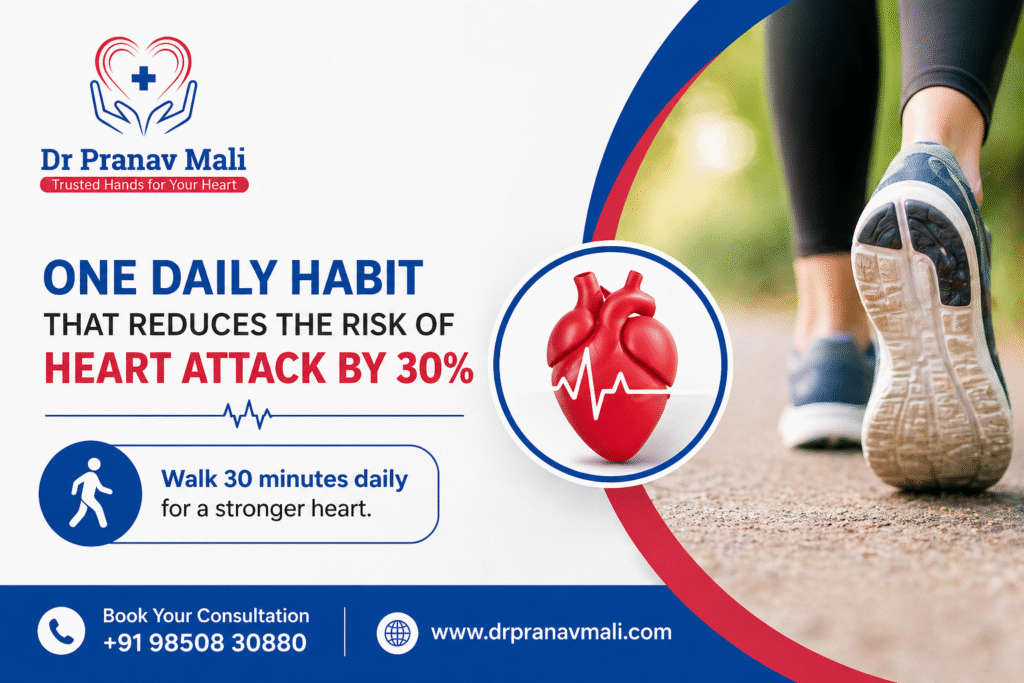
Heart disease continues to be one of the leading causes of death worldwide, yet the solution to reducing your risk may be simpler than you think. What if one small daily habit could significantly lower your chances of a heart attack? It’s not about expensive treatments or complicated routines—it’s about consistency. Studies have shown that regular physical activity, even something as simple as a daily brisk walk, can reduce the risk of heart attack by up to 30%.
Sounds surprisingly simple, right? But this one habit has the power to transform your heart health when done consistently. Let’s explore how it works and why experts, including leading specialists like Dr. Pranav Mali, strongly recommend it.
Why Heart Health Should Be Your Priority
Your heart works 24/7 without a break, pumping blood and oxygen throughout your body. Yet, modern lifestyles—sedentary routines, unhealthy diets, and stress—put enormous strain on it. Many people only think about heart health after symptoms appear, but prevention is always better than cure.
That’s where simple daily habits come in. Instead of waiting for warning signs, taking proactive steps can protect your heart for years to come.
The One Habit: Daily Brisk Walking
If there’s one habit that stands out above the rest, it’s walking for at least 30 minutes every day. You don’t need a gym membership or fancy equipment—just a pair of comfortable shoes and a commitment to your health.
Brisk walking increases your heart rate, improves blood circulation, and strengthens your cardiovascular system. Over time, it helps reduce major risk factors like high blood pressure, high cholesterol, and obesity.
Think of it as a daily investment in your heart. The more consistent you are, the greater the returns.
How Walking Reduces Heart Attack Risk
1. Improves Blood Circulation
Walking helps your heart pump more efficiently, ensuring that oxygen-rich blood reaches every part of your body. Better circulation reduces the chances of plaque buildup in arteries.
2. Lowers Blood Pressure
Regular physical activity helps keep your blood pressure in check. High blood pressure is one of the biggest risk factors for heart attacks, and walking is a natural way to manage it.
3. Reduces Bad Cholesterol
Walking can lower LDL (bad cholesterol) while increasing HDL (good cholesterol). This balance is crucial for maintaining healthy arteries.
4. Helps Maintain Healthy Weight
Excess weight puts extra strain on your heart. A daily walk helps burn calories and maintain a healthy body weight.
5. Reduces Stress
Stress is often overlooked, but it plays a major role in heart disease. Walking releases endorphins, which help reduce stress and improve mood.
How Much Walking Is Enough?
You don’t need to overdo it. Start with:
- 30 minutes a day, 5 days a week
- A pace where you can talk but not sing
- Gradually increase intensity if comfortable
Consistency matters more than intensity. Even small steps add up over time.
Signs Your Heart Needs Attention
While prevention is key, it’s also important to recognize warning signs:
- Chest pain or discomfort
- Shortness of breath
- Fatigue
- Irregular heartbeat
If you notice any of these symptoms, don’t ignore them. Early diagnosis can save lives.
Expert Cardiac Care in Nashik
When it comes to heart health, expert guidance is essential. Dr. Pranav Mali is widely regarded as a trusted Cardiologist in Nashik, known for his expertise in cardiothoracic and vascular surgery.
With years of experience, Dr. Mali provides comprehensive cardiac care—from early diagnosis and preventive strategies to advanced surgical treatments. His patient-focused approach ensures that every individual receives personalized care tailored to their condition.
At his cardiology clinic in Nashik, patients benefit from:
- Advanced diagnostic facilities
- Preventive heart health programs
- Expert surgical care
- Compassionate and result-oriented treatment
His mission is simple: to help patients live healthier, longer lives through better heart care.
Additional Tips to Support Heart Health
While walking is powerful, combining it with other healthy habits can amplify the benefits:
- Eat a heart-healthy diet rich in fruits, vegetables, and whole grains
- Avoid smoking and limit alcohol intake
- Get enough sleep (7–8 hours daily)
- Manage stress through relaxation techniques
- Schedule regular health checkups
Think of these habits as a support system for your heart.
Conclusion
Sometimes, the most powerful changes are also the simplest. A daily 30-minute walk may seem small, but its impact on your heart health is massive. By making this one habit part of your routine, you can significantly reduce your risk of heart attack and improve your overall well-being.
Your heart takes care of you every second—maybe it’s time you returned the favor.